✔ FASTER RECOVERY
✔ BETTER TECHNIQUE
✔ STRONGER GAINS
All of the top athletes in the world focus just as much attention on their bodies as they do their skills. When it comes to calisthenics, many common injuries occur because the body isn’t prepared for the new movements it’s being put through.
You may have the strength to force your way through skills and reps; however, your body is overcompensating in other ways that can cause injuries, further reduce your range of motion in movements, and reduce your ability to progress.
That’s why I created the Mobility for Calisthenics program.
I’m no stranger to the sport of calisthenics. I competed in gymnastics growing up, and I was the first female champion in the Battle of the Bars calisthenics competition. I’m now a doctor of physical therapy, and I focus on mobility for athletic performance.
I built this program to help calisthenics athletes correct the imbalances that are building in their bodies. This is for those who want to avoid injuries and those who are already injured and want to reverse the damage.
20 MIN A DAY to optimize your body for calisthenics.
That’s a pretty easy commitment to your hobby and overall health.
The program is broken up into weekly segments that focus on different areas of the body. Here’s a basic outline:
Breath and Upperbody prep
Sagittal Plane Upper & Lower Mobility
Wrist and Ankle Mobility
Spine Mobility
Deep Joint Mobility
Active Mobility
Note: If you don’t understand some of these terms, don’t worry. Each movement, term, and purpose will be thoroughly explained in every video.
Also, the program is laid out for you to learn over the course of 12 weeks however you can always set your own pace.
In order to achieve that solid, straight line that everyone desires in the handstand, there are certain areas of the body that must have adequate mobility! The number one place that people often neglect are the wrists. A handstand requires 90 degrees of wrist extension. Without this range of motion, a person can develop cysts, strains and pain that can travel all the way up to the elbow! The next necessary range of motion is 180 degrees of shoulder flexion. In order to achieve this range, it requires improved mobility through the upper back (thoracic spine), shoulder blade, glenohumeral joint and stability from the muscles that support the shoulder blade into the shoulder. As you improve mobility, you increase your ability to achieve a solid handstand!
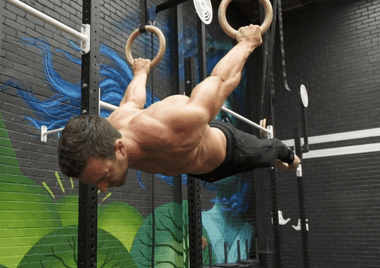
Most people believe that mobility is just stretching. However, mobility is actually the ability to actively control your available range of motion. When it comes to the back lever, at least 15 to 30 degrees of shoulder extension is needed to achieve this skill. Without this active range in the shoulder off the bar, you end up placing increased force and strain on the shoulder ligaments, tendons and musculature. To achieve safe and sustainable shoulder extension for the back lever, you must understand how to effectively improve active mobility within the glenohumeral joint.
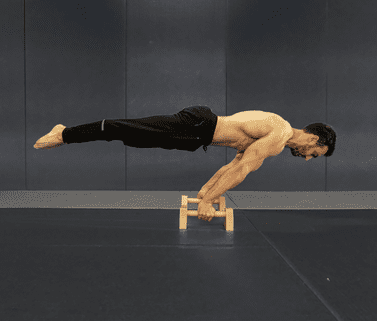
The planche is an advanced calisthenics skill that requires a difficult level of mobility that most people would not even consider. Similar to the handstand, wrist extension mobility and stability is very important, but also, the shoulder blades!
Being able to control scapular mobility into upward rotation and protraction are motions that take skill, time, and practice to develop. This proper scapular mobility and control leads to proper muscular activation and strength to achieve the planche.
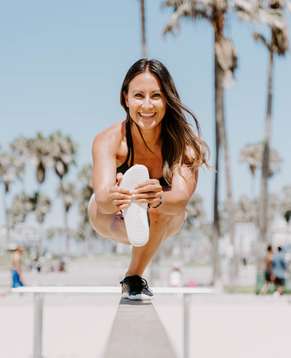
The pistol squat requires adequate mobility through the joints of the ankle and hip and the soft tissue of the hamstring. Yet, beyond hamstring flexibility, the pistol squat requires hip flexor and quadriceps strength as well through the compressed hip flexion position at the bottom of the squat. In order for the hip to achieve that deep hip flexion range, the hip requires hip internal rotation in the joint as well! This internal rotation allows the femur to glide posteriorly (back) and inferiorly (down) in the same direction that is needed for hip flexion to prevent hip pinching or restriction at the front of the hip. Just as well, many people have limited ankle dorsiflexion range of motion. In general, the knee should be able to pass the toe 4-5 inches in a deep squat position for it to be considered "functional." Without this end-range position, it would be very difficult for a person to be able to achieve a full pistol squat.
I'm grateful I found @docjenfit after I had a rotator-cuff impingement and was in persistent pain. Doc, you are a wealth of information on how to bulletproof the body and move properly! Taking control by doing the mobility exercises before and after I surf, swim, or lift have helped me prevent injuries.
Thank you so much for the mobility about the shoulders. I tried hanging on my rings. I think my shoulder took benefit from only one try and the little bump is less on the shoulder blade, which means more mobility! Yay! Thank you!
These stretches have saved me. I'm able to run past the 30-minute mark without my knee giving up on me. Last week I ran 3.5 days straight without any pain. Thank you for these educational videos. They are wonderful and much appreciated.
Thank you so much for your mobility series! I'm doing a lot of bouldering and calisthenics and experienced that my hip is "blocking" my range of motion to the side with a small stabbing pain. With your techniques, it feels so much more relaxed after only a few days.
Increasing your range of motion through mobility training can help you unlock new strength and movement in your body. It’s crucial in every sport to reach optimal performance.
This program was created to help improve mobility for athletics, specifically calisthenics. It can help you avoid injuries and heal some older ones, however every injury is different so it’s always best to consult a physician in person.
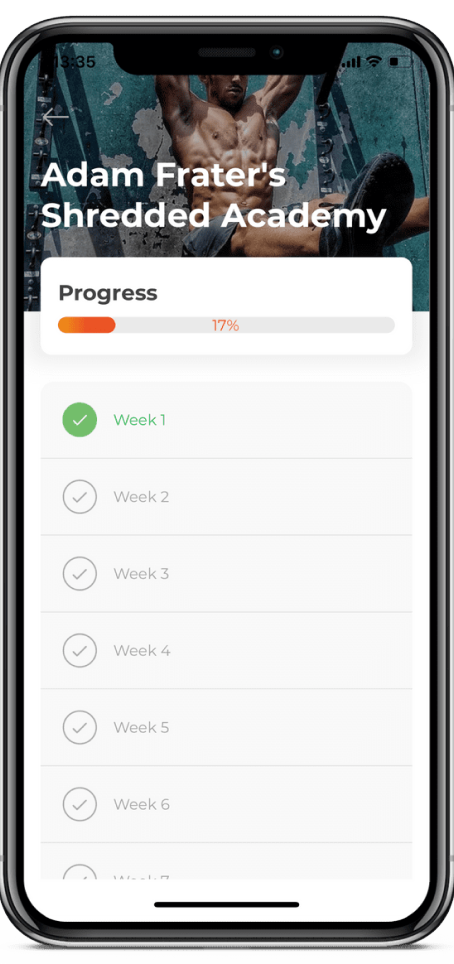
This program can be accessed via our mobile app. Once you purchase you will be sent information on how to properly download and access the course materials.
No. Everyone can benefit from training mobility and there’s no skill needed. Start at your own pace with your own range and trust that you will gradually improve as you train.